


Urban Transformation and Legal Processes — 6306 Your Rights Under Law
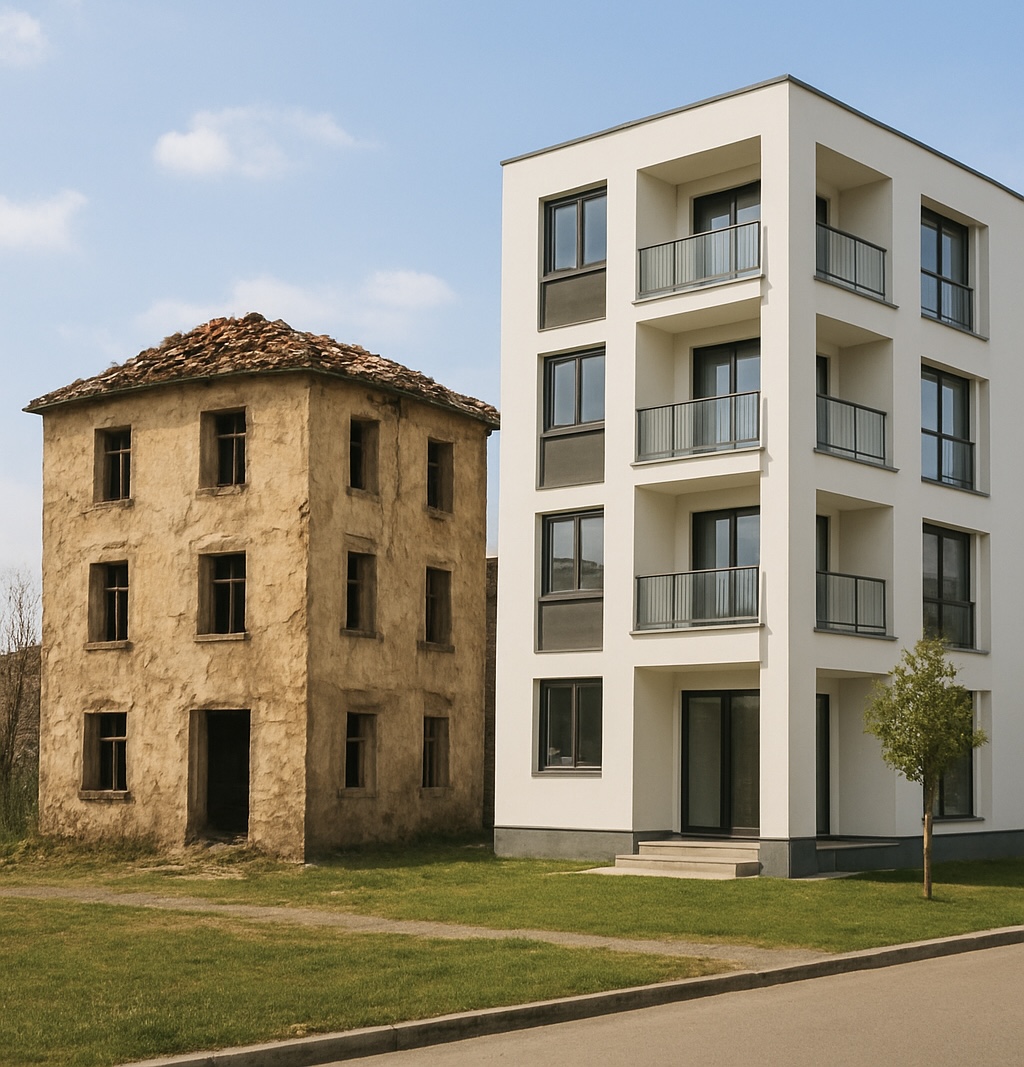
“Urban transformation” is the process of transforming old, risky, earthquake-resistant, inadequate building stocks in terms of infrastructure and physical environmental conditions, in accordance with the principles of planned and healthy urban structuring. In this process:
- Projects are developed in cooperation with the public and private sectors,
- Planning and projects are carried out in accordance with the legislation,
- Various financing models are applied, such as floor versus floor, revenue sharing, direct build model,
- Regulations are introduced to prevent the victimization of rightholders.
The most important legal regulation in this area in Turkey **Law No. 6306 “On Transformation of Persons at Risk of Disaster” **. In addition, regulations on the implementation of this Law, administrative procedures, notarial acts, zoning legislation, regulations on land title law and property rights guarantees enshrined in the Constitution are common legal norms.
!!!! Now one of the most important changes in urban transformation is the rate of owner approval required for a conversion decision to be made. Previously, a 2/3 majority of floor owners were sought. However, since it is a process that blocks this process and complicates the decision-making mechanism, with the change of regulations dated November 9, 2023, according to the update in the Urban Transformation Law No. 6306, the approval of the mere majority of the floor owners (i.e. 50+1%) is sufficient for the conversion.
Below I will consider in detail the main provisions of Law No. 6306, the implementing regulation, important articles in the Constitution, frequent problems and solutions in implementation, as well as the role of the lawyer.
Law No. 6306 and Related Legislation
Purpose and Scope of the Law
Law No. 6306 is the “Law on the Transformation of Areas at Risk of Disaster”, dated May 16, 2012 and published in the Official Gazette No. 28309. The purpose of this Law is to regulate aspects such as the detection of risky structures and risky areas, demolition, reconstruction, value determination, ownership, contracts, assistance and financing.
The Act covers both applications within a risky area and applications limited to structures of a risky nature. The text of the law is quite long; here we quote some important articles in full text and will make their interpretations.
Substantial Substances
Below are selections from some of the critical provisions of Law 6306:
ITEM 3 ---- (Procedures for Determination of Risky Buildings)
“The detection of risky structures shall be carried out at their own expense, primarily by building owners or legal representatives, to institutions and organizations licensed by the Presidency, at their own expense, within the framework of the procedures and principles to be drawn up by the President.”
*** With this article, the principle of entrusting risky structure detection operations to licensed organizations is established; the responsibility of owners is clearly regulated.
ARTICLE 6 ---- (ApplicationJobs)
Article 6 of the Law regulates the method of implementation of transformation, powers, contractual principles and joint decision-making procedures.
For example, in paragraph 5 of Article 6, “The administration is authorized to implement, build or enforce, in risky areas, reserve building areas and real estate with the cooperation of the public and private sector or through floor/commoditization procedures; to determine land shares, to allocate shares, to combine shares; to establish limited equal rights There is a judgment.”
In addition, clause 13, which was added to Article 6 by Law No. 7181 in 2019, is as follows (in full text below):
“In the case of implementation by natural persons and private law legal entities in the areas and parcels covered by this Law, the sale of independent units belonging to the contractors undertaking the construction work may be made according to the level of progress of the construction and on the basis of the permission of the Administration. The Contractor applies to the Administration for permission to sell the independent units that fall within its share. The administration determines the rate of completion of construction by on-site detection or checking from the building inspection system and notifies the relevant land registry office that the sale of independent units falling to the contractor's share at a rate below 10% of this rate can be made. All owners must have the consent of all owners for the sale of independent units that are part of the contractor's share at or above the rate of completion of construction.”
*** This regulation introduced the principle of limiting the early sale of independent parts belonging to the share of contractors and seeking the consent of the owners.
ARTICLE 17 ---- (Evacuation)
“Real estate owners who enter into an agreement with the relevant institution, if they exist within fifteen days according to the calendar to be determined by the relevant institution, by paying tax debts such as water, electricity, telephone and natural gas-like services and real estate tax, if they exist within fifteen days delivers the structure empty.”
**** This provision regulates the obligation of owners to vacate their post-contractual structures within a certain period of time.
ARTICLE 18 — (PlanningSüreci)
“In the plans for the field of application... it is essential to reduce disaster risks, improve the physical environment, ensure social and economic development, improve energy efficiency and climate sensitivity, and improve the quality of life.”
It is emphasized that in the planning processes it is necessary to take into account criteria such as the preservation of the urban fabric, the complete connection with the public infrastructure.
The full text of the regulation and its consolidated form can be studied from official sources “Regulations for the Implementation of Law No. 6306”.
Since the entire Code is long, it is impractical to get all of them here; but you need to study the relevant articles with your lawyer for your particular file.
Implementation Regulation and Other Regulations
No. 6306, issued for the reflection of the Law on applications Implementation Regulation are available. This regulation includes risk structure detection procedures, planning principles, value determination mechanisms, ownership determination procedures, appeal processes and other technical regulations.
Some important regulatory provisions:
- Determination of engineers who will be involved in the identification of risky structures by training and examination (requirements for engineers to work in licensed organizations)
- The task of asset valuation commissions in determining value, criteria, tax values, assessment procedures based on prices obtained from similar real estate
- Provisions on the procedure of processes such as technical delegations and decision-making procedures, reporting requirements
- Determination of boundaries of real estate within the scope of application, rules of land regulations such as settlement, expression, incorporation, division
In addition, additional regulations such as the “Instruction (Application of Law No. 6306)” have also been published in order to resolve the uncertainties encountered in the application of 6306 and to clarify the principles of its implementation.
In addition, in administrative processes in urban transformation projects To the Administrative Procedure Law No. 2577 Temporary arrangements introduced are also important; in some cases, factors such as evaluation time and missed periods affect the substantive examination of the file.
Constitution and Fundamental Rights
Urban transformation applications, direct to the right of ownership and protection of private property touches on constitutional guarantees. Therefore, the rights and guarantees in the Constitution constitute an important limit.
specifically Article 35 of the Constitution regulates the right to property. This article is in full text:
**ARTICLE 35 — The right to property may be limited to the extent of public order and social benefit, by law.
The exercise of the right to property is regulated by law, subject to the observance of the public interest and the observance of the owner's interest.
No one can be deprived of the right to property; it is possible for property to be expropriated in compulsory cases for the purpose of the public good in return.
Compensation shall be made without delay and in full in accordance with the principles established in the law, open to judicial review.”
*** This provision establishes the limit of public intervention in the processes of urban transformation: the intervention must be “by law”, it must be measured, the public interest must be observed, the owner must also have a balanced remuneration.
In addition, in article 40 of the Constitution the right to effective application arranged. This right allows citizens to resort to administrative or judicial means to protect their rights. The Constitutional Court has also examined allegations of violations of effective right of application and right of property in urban transformation practices.
For example, the General Assembly of the Constitutional Court ruled in a decision that failure to examine complaints in the process of urban transformation leads to a violation of the right to property and the right to effective appeal.
This decision demonstrates the importance of effective appeals, litigation and audit processes against administrative actions in transformation projects.
In urban transformation, in summary, the legal process generally works as follows:
- For the structure together with the application risky structure report It is taken away and the deed is dishonored.
- To all owners of the risky structure official notification is done.
- Malikler Approval rate of 50+1% if provided, the conversion decision becomes valid.
- Owners who do not agree with the decision are offered for their independent parts at the nominal value.
- Shares of non-accepting owners are sold by auction to other owners. If it cannot be sold, it can be nationalized by TOKİ or the Department of Urban Transformation.

Frequently encountered in the process of urban transformationProblems and Solution Suggestions
Below, common problems in practice substance substance We list; we also suggest the risks and possible solutions for each problem.
1. Ambiguity of the contract/incomplete provision of information on the project
In contracts for floors with contractors, the owner may lose the advantage if aspects such as project, plan, sketch, independent section, area of use, transfer time are not clear.
Detailed project and plan information is requested before the contract is signed; cancellation or correction of the provision may be requested based on the “indefinite contract” clause. The draft contract should be considered together with the lawyer.
2. Injustice in value determination
The real estate values of the owners may be much lower than those determined by the commissions, which leads to the loss of rights.
The right to appeal the decision of the value appreciation commission (request for amendment), expert review, submit independent valuation reports. In addition, he has the right to file a lawsuit for compensation.
3. Violation of the right of property/application without the consent of the owners
Without obtaining the consent of the owners, land shares, division of shares, etc. can be forced; the provisions of “resale” can be abused.
Guarantee of the right to property arising from article 35 of the Constitution, the action for annulment, the right to appeal to the officiated administration, the request to stop the execution.
4. Early sale (of independent departments falling to the contractor)
The contractor can put up for sale the independent parts that fall on his share before the construction is completed; the rights of the owners may suffer.
Appeal to the limit of early sale, in accordance with Article 6 (13) of the Law, appeal against the limit of early sale; filing cancellation lawsuits if the sale has been made.
5. Dispute in determining ownership
Who will be considered a “rightful owner” and who will be a stakeholder may be unclear; disagreements may arise between shareholders.
Technical examination, population records, title records, determination of ownership by court decision; detailed expert examinations.
6. Disputes of discharge process and duration
There may be disagreement over the timing of the evacuation of the structure after the agreement, debts of the owner, lease arrangements.
The periods specified in the law and regulations are reviewed; petitions for eviction, application to the administrative court in the event of a dispute.
7. Stopping of the project/disruption of construction
Project financing is shaken, construction stops; the owner may remain a victim for a long time.
In the contract there are assurance mechanisms such as a “construction time commitment”, penalties for delay, letters of guarantee; if the project is stopped, compensation can be sued.
8. Planning and zoning incompatibilities
Post-project structuring format, compliance with the zoning plan, and compliance with public infrastructure may arise.
Objection to changes in the plan, legal assessment of the date of entry into force of the zoning plan, filing a lawsuit against administrative actions.
9. Disputes on expropriation procedures and expropriation fees
If necessary, the land can be expropriated, but there may be a dispute over the price and compensation.
Appeal to the expropriation price, valuation reports, judicial way, requests for price increase.
10. Failure to process effective application procedures/delay in judicial process
The right to appeal against administrative proceedings is not exercised or the judicial processes take a long time.
Decisions of the Constitutional Court, the term rules of Law No. 2577, timely exercise of the obligations to file a lawsuit, stop the execution.
The rules of law, contract terms, file evidence and procedural requirements that come into play in each issue may be different. That's why professional support is essential.

The Role and Importance of the Lawyer
The role of a lawyer in the process of urban transformation covers the following aspects:
- Contract Review and Design
• Preparing draft contracts for floor, land share, revenue sharing agreements, establishing regulations to prevent loss of rights.
• Clarify aspects such as project, plan, sketch, duration, penalties, number of independent sections, common areas.
• To balance the clauses so that there is no ambiguity or falsehood in the contract. - Title Determination and Evidence Collection
• Examination of ownership of rights (population, title records, documents of succession, etc.).
• Collection of documents that will be the basis of the file: zoning status, plan decisions, documents showing value, expert reports. - Contribution to the Value Determination Process
• Prepare independent valuation reports or review existing reports.
• Prepare requests for appeals against the decisions of the asset valuation commission. - Defense/Appeal Against Administrative Actions
• Preparing appeals and complaints against administrative processing, from identification of risky structures to demolition, decision processes.
• Carry out requests to stop execution, litigation processes, if necessary. - Execution of Cases
• Opening cancellation cases against the administration, full judicial proceedings, compensation cases.
• Determining litigation strategy in courts, presenting evidence, conducting appeal processes. - Protection of Rights at the Constitutional and Human Rights Level
• Using constitutional guarantees such as the right to property, the right to effective application.
• Evaluate individual application processes to the Constitutional Court. - Negotiation and Mediation Processes
• To represent the project owners in the negotiation processes with the municipality, administration and the contractor.
• Compromise, offer alternative solutions. - Time Tracking and Procedural Audit
• To ensure that administrative and judicial periods are not missed (appeal period, time for filing a lawsuit, periods for notification of decisions, etc.).
• Prevent rejection of case files for lack of procedure. - Solution-Oriented Approach
• Recommendations of preventive legal measures before problems arise (letters of guarantee, guarantee mechanisms, insurance, project control mechanisms).
• Minimize risks by providing legal advice in project management.
Working with a lawyer ensures both the correct and effective conduct of the process, and prevents loss of rights. Legal support is especially important in long-term projects.
Rights Citizens Need to Know
Below are the basic rights that citizens should be aware of in the process of urban transformation:
- Right to object to the process of identifying risky structures
- Appeal against valuation decisions and request for independent valuation
- Equal rights conditions in a floor reward/revenue sharing agreement
- Access to project information and contract text
- Right to determination of ownership
- Right to release schedule and delivery terms
- The right to go to the case and have administrative proceedings canceled
- Right to claim compensation
- The right to property at the constitutional level and the right to effective application
- Attorney support and the right to receive legal advice throughout the process
Exercising these rights is critical to reducing victimization in the process.
consequence
The legal issues encountered in the urban transformation process are complex; uncertainties, project and zoning disputes, value determination disputes, contractual rights losses are common. However, when the rights and legal avenues outlined above are used correctly, citizens can be in a strong position throughout the process.
Urban transformation is a process that offers great opportunities, but can lead to serious victimization when not managed correctly. To protect the rights of citizens legal knowledge and strategy support is a must.
📌 We, as a law firm, are with you in your urban transformation process. Examining your file down to the smallest detail, at every stage of the process We guarantee your rights.
👉 You can contact us for more information and consultation.
Keywords: Urban transformation, urban transformation lawyer, expropriation, compensation, consulting.